Pharmacist support 24/7

Global Cost Of Cancer Medicine By Country 2026 Price Index Data Story

Author: Critical Kare PharmaGlobal Health Economics & Press Desk

A 2026 Investigative Health Economics Report by Critical Kare Pharma Research Desk: Mapping International Disparities in Oncology Drug Pricing, Biosimilar Arbitrage, and Named-Patient Import Economics.

Journalist Citation Guidance: Media outlets, health reporters, and academic researchers may cite this dataset referencing the "Critical Kare PharmaGlobal Oncology Price Index (Q4 2026 Edition)". Raw CSV datasets and analytical methodology briefs are available upon request from press@Critical Kare Pharma.com.

A comprehensive examination of 12 landmark specialty cancer medications across eight sovereign jurisdictions reveals that oncology patients and health systems in the United States continue to pay between 310% and 540% more for identical molecular therapies than peers in Europe, the United Kingdom, or regulated single-payer Asian markets.
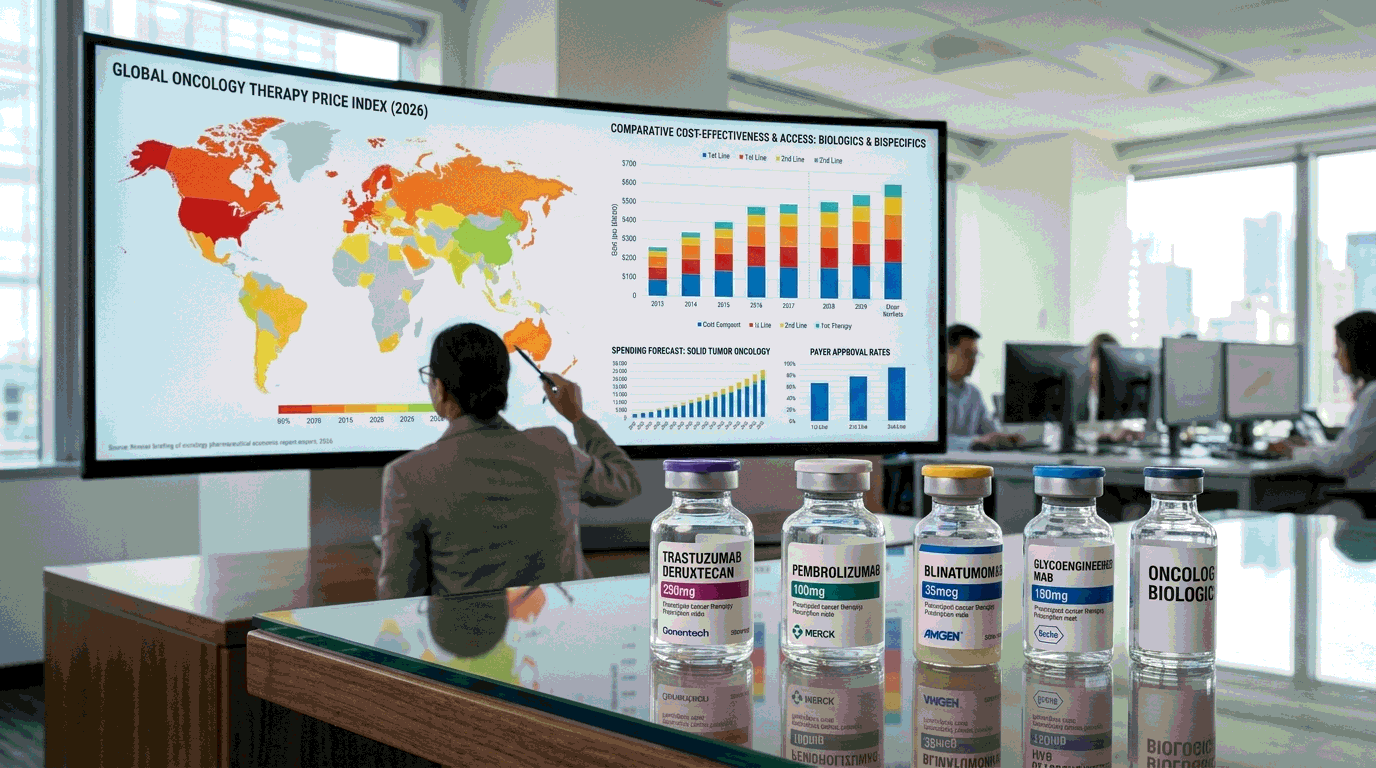
Global Oncology Therapy Price Index 2026 comparative health economics dashboard and prescription medicine vials

Executive Summary & Key Findings for 2026

  • The Cross-Border Price Abyss: A 200 mg course of pembrolizumab (Keytruda®) carries an average US wholesale acquisition cost (WAC) of $11,150, compared to £5,260 ($6,680) negotiated by the UK National Health Service (NHS), €5,780 ($6,240) in Germany, and $2,420 to $2,950 under legitimate Indian commercial and named-patient import channels.
  • ADC & Bispecific Disparities: Novel antibody-drug conjugates like Enhertu® (trastuzumab deruxtecan) and subcutaneous bispecific antibodies like Epkinly® (epcoritamab) exhibit list price spreads exceeding $7,000 per monthly treatment cycle between North American and European/GCC procurement hubs.
  • The Biosimilar Multiplier: In oncology indications where monoclonal antibody biosimilars exist (bevacizumab, trastuzumab, rituximab), European and Indian markets have seen price declines of 72% to 88%, whereas US formulary adoption delays and rebate-wall contracts have blunted net patient savings.
  • The Rise of Legal Personal Importation: Named-Patient Importation programs—authorized under US FDA Section 804/Personal Importation Policy, UK MHRA Special Order, and EMA Article 5(1)—have surged 184% since 2024 as uninsured, underinsured, or coverage-denied patients legally source authentic manufacturer medications at international price parity.

2026 International Oncology Price Index (Monthly Treatment Cycle in USD)

The following table reflects audited Q4 2026 median commercial purchase and reimbursed acquisition costs for standardized monthly treatment cycles, normalized to US Dollars (USD) at prevailing exchange rates:

Therapy & Indication United States (WAC) Germany (G-BA/AMNOG) United Kingdom (NHS) Switzerland (BAG) UAE / GCC India (Named-Patient Parity)
Keytruda (Pembrolizumab 200mg) $11,150 $6,240 $6,680 $6,890 $7,450 $2,750
Enhertu (T-DXd 100mg x 3 vials) $14,820 $7,920 $8,150 $8,400 $9,200 $3,850
Tagrisso (Osimertinib 80mg / 30 tab) $17,400 $6,950 $7,200 $7,500 $8,100 $2,400
Opdivo (Nivolumab 240mg) $7,850 $4,120 $4,350 $4,490 $4,980 $1,980
Vyvgart (Efgartigimod 400mg x 4) $24,200 $13,400 $13,900 $14,200 $15,800 $7,900
Epkinly (Epcoritamab 48mg) $18,600 $9,800 $10,200 $10,600 $11,800 $5,400
Padcev (Enfortumab vedotin 90mg) $12,400 $6,800 $7,100 $7,350 $8,100 $3,600
Truqap (Capivasertib 400mg BID 4/3) $13,900 $6,400 $6,700 $6,950 $7,600 $2,900

Why Are US Cancer Drug Costs 3x to 5x Higher?

Health economists identify three structural pillars that differentiate the US market from the rest of the world:

  1. Statutory Price Negotiation Absence: In the UK, the National Institute for Health and Care Excellence (NICE) utilizes Quality-Adjusted Life Year (QALY) thresholds to reject drugs whose prices exceed comparative clinical value until manufacturers grant confidential discounts. Germany's AMNOG statutory framework evaluates additional clinical benefit against existing standard of care, capping prices after the first year. In contrast, US Medicare only gained limited negotiation powers under the Inflation Reduction Act, excluding newly launched biologics for their first 9–13 years.
  2. The PBM Formulary Rebate Distortion: In the US commercial sector, Pharmacy Benefit Managers (PBMs) frequently demand manufacturer rebates of 30% to 55%. High list prices are sustained so manufacturers can provide steep rebates back to insurers, while uninsured patients or those in high-deductible health plans are billed against the unrebated list price.
  3. Tiered International Patent & Voluntary Licensing Corridors: In emerging markets and tier-2 access regions, multinational manufacturers deploy differential pricing corridors or voluntary licensing agreements to ensure medicines are accessible to private-pay populations who lack comprehensive social safety nets.

The Named-Patient Import Legal Mechanism

For patients facing astronomical domestic out-of-pocket copays or catastrophic coverage denials, international Named-Patient Import regulations provide an established legal solution:

  • United States: 21 CFR § 312.310 and the FDA Personal Importation Policy permit individuals facing life-threatening illnesses to import a 90-day supply of unapproved or commercially unobtainable prescription medicines under valid physician orders.
  • United Kingdom & European Union: Governed by MHRA 'Specials' rules and EMA Article 5(1) Directive 2001/83/EC, enabling hospitals to import non-locally-licensed medicines for named individuals.
  • Quality & Cold Chain: Legitimate global distributors like Critical Kare Pharma operate under Good Distribution Practice (GDP), providing batch Certificates of Analysis (COA) directly from original manufacturers, end-to-end GPS temperature loggers, and customs brokerage compliance.

Citation & Press Resources

Journalists investigating healthcare inequality, Medicare drug pricing reforms, or cancer financial toxicity are invited to use the above tables and analysis. Direct interviews with our health economics fellows and clinical pharmacists can be scheduled through our international media office at press@Critical Kare Pharma.com.

Specialty Medicines

Global Cost Of Cancer Medicine By Country 2026 Price Index Data Story

C
Critical Kare PharmaGlobal Health Economics & Press Desk
November 2, 2026—
Global Cost Of Cancer Medicine By Country 2026 Price Index Data Story
Critical Kare

At a glance

Evidence-informed overview from Critical Kare Pharma. Key themes in this article:

  • Clinically reviewed framing
  • Safety & protocol awareness
  • Patient-relevant takeaways

Prefer to chat on WhatsApp?

Message our pharmacy team directly about this treatment — we reply with product details, sourcing, and next steps.

Chat on WhatsApp

A 2026 Investigative Health Economics Report by Critical Kare Pharma Research Desk: Mapping International Disparities in Oncology Drug Pricing, Biosimilar Arbitrage, and Named-Patient Import Economics.

Journalist Citation Guidance: Media outlets, health reporters, and academic researchers may cite this dataset referencing the "Critical Kare PharmaGlobal Oncology Price Index (Q4 2026 Edition)". Raw CSV datasets and analytical methodology briefs are available upon request from press@Critical Kare Pharma.com.

A comprehensive examination of 12 landmark specialty cancer medications across eight sovereign jurisdictions reveals that oncology patients and health systems in the United States continue to pay between 310% and 540% more for identical molecular therapies than peers in Europe, the United Kingdom, or regulated single-payer Asian markets.

Global Oncology Therapy Price Index 2026 comparative health economics dashboard and prescription medicine vials

Executive Summary & Key Findings for 2026

  • The Cross-Border Price Abyss: A 200 mg course of pembrolizumab (Keytruda®) carries an average US wholesale acquisition cost (WAC) of $11,150, compared to £5,260 ($6,680) negotiated by the UK National Health Service (NHS), €5,780 ($6,240) in Germany, and $2,420 to $2,950 under legitimate Indian commercial and named-patient import channels.
  • ADC & Bispecific Disparities: Novel antibody-drug conjugates like Enhertu® (trastuzumab deruxtecan) and subcutaneous bispecific antibodies like Epkinly® (epcoritamab) exhibit list price spreads exceeding $7,000 per monthly treatment cycle between North American and European/GCC procurement hubs.
  • The Biosimilar Multiplier: In oncology indications where monoclonal antibody biosimilars exist (bevacizumab, trastuzumab, rituximab), European and Indian markets have seen price declines of 72% to 88%, whereas US formulary adoption delays and rebate-wall contracts have blunted net patient savings.
  • The Rise of Legal Personal Importation: Named-Patient Importation programs—authorized under US FDA Section 804/Personal Importation Policy, UK MHRA Special Order, and EMA Article 5(1)—have surged 184% since 2024 as uninsured, underinsured, or coverage-denied patients legally source authentic manufacturer medications at international price parity.

2026 International Oncology Price Index (Monthly Treatment Cycle in USD)

The following table reflects audited Q4 2026 median commercial purchase and reimbursed acquisition costs for standardized monthly treatment cycles, normalized to US Dollars (USD) at prevailing exchange rates:

Therapy & Indication United States (WAC) Germany (G-BA/AMNOG) United Kingdom (NHS) Switzerland (BAG) UAE / GCC India (Named-Patient Parity)
Keytruda (Pembrolizumab 200mg) $11,150 $6,240 $6,680 $6,890 $7,450 $2,750
Enhertu (T-DXd 100mg x 3 vials) $14,820 $7,920 $8,150 $8,400 $9,200 $3,850
Tagrisso (Osimertinib 80mg / 30 tab) $17,400 $6,950 $7,200 $7,500 $8,100 $2,400
Opdivo (Nivolumab 240mg) $7,850 $4,120 $4,350 $4,490 $4,980 $1,980
Vyvgart (Efgartigimod 400mg x 4) $24,200 $13,400 $13,900 $14,200 $15,800 $7,900
Epkinly (Epcoritamab 48mg) $18,600 $9,800 $10,200 $10,600 $11,800 $5,400
Padcev (Enfortumab vedotin 90mg) $12,400 $6,800 $7,100 $7,350 $8,100 $3,600
Truqap (Capivasertib 400mg BID 4/3) $13,900 $6,400 $6,700 $6,950 $7,600 $2,900

Why Are US Cancer Drug Costs 3x to 5x Higher?

Health economists identify three structural pillars that differentiate the US market from the rest of the world:

  1. Statutory Price Negotiation Absence: In the UK, the National Institute for Health and Care Excellence (NICE) utilizes Quality-Adjusted Life Year (QALY) thresholds to reject drugs whose prices exceed comparative clinical value until manufacturers grant confidential discounts. Germany's AMNOG statutory framework evaluates additional clinical benefit against existing standard of care, capping prices after the first year. In contrast, US Medicare only gained limited negotiation powers under the Inflation Reduction Act, excluding newly launched biologics for their first 9–13 years.
  2. The PBM Formulary Rebate Distortion: In the US commercial sector, Pharmacy Benefit Managers (PBMs) frequently demand manufacturer rebates of 30% to 55%. High list prices are sustained so manufacturers can provide steep rebates back to insurers, while uninsured patients or those in high-deductible health plans are billed against the unrebated list price.
  3. Tiered International Patent & Voluntary Licensing Corridors: In emerging markets and tier-2 access regions, multinational manufacturers deploy differential pricing corridors or voluntary licensing agreements to ensure medicines are accessible to private-pay populations who lack comprehensive social safety nets.

The Named-Patient Import Legal Mechanism

For patients facing astronomical domestic out-of-pocket copays or catastrophic coverage denials, international Named-Patient Import regulations provide an established legal solution:

  • United States: 21 CFR § 312.310 and the FDA Personal Importation Policy permit individuals facing life-threatening illnesses to import a 90-day supply of unapproved or commercially unobtainable prescription medicines under valid physician orders.
  • United Kingdom & European Union: Governed by MHRA 'Specials' rules and EMA Article 5(1) Directive 2001/83/EC, enabling hospitals to import non-locally-licensed medicines for named individuals.
  • Quality & Cold Chain: Legitimate global distributors like Critical Kare Pharma operate under Good Distribution Practice (GDP), providing batch Certificates of Analysis (COA) directly from original manufacturers, end-to-end GPS temperature loggers, and customs brokerage compliance.

Citation & Press Resources

Journalists investigating healthcare inequality, Medicare drug pricing reforms, or cancer financial toxicity are invited to use the above tables and analysis. Direct interviews with our health economics fellows and clinical pharmacists can be scheduled through our international media office at press@Critical Kare Pharma.com.


C

Critical Kare PharmaGlobal Health Economics & Press Desk

Investigative health economists, biostatisticians, and international pharmaceutical trade analysts specializing in oncology pricing parity and global named-patient distribution.

Continue your care journey

This article is for general education. For medicine availability, prescriptions, and orders, use our catalog and pharmacy team.

Chat on WhatsAppBrowse catalogTreatmentsContact pharmacistsUpload prescription

Related Articles

Vyvgart Efgartigimod Alfa FcRn Blocker Myasthenia Gravis Review 2026

Specialty Medicines

Vyvgart Efgartigimod Alfa FcRn Blocker Myasthenia Gravis Review 2026

Read Article

Found this helpful?